The Delicate Marriage art and capital in Los Angeles
"The most common way people give up their power is by thinking they don't have any.” - Alice Walker
Right to the point: artists, writers and creatives need a better vision for the future. The industries and leaders that serve artists have failed them by allowing technology and private equity to pillage the delicate marriage of art and capital. A new future will require disruption on a scale we’ve rarely seen because the entrenched systems are bigger than most of us know. Read Jeffrey Katzenberg’s recent piece, “The World is Changing: AI for Creativity.” I don’t agree with all of it, but Katzenberg is right about a few things. First, technology is just a tool. Human creativity brings it to life. Two, credit and compensation must be solved for AI to work well for creatives. And third, new forms of art will emerge from all of this. I believe we can get even more clear on what a good future looks like but this isn’t an altogether bad take.
To get to that future, we must start asking hard questions of our leaders, especially when their choices impact cultural norms and how people make a living. More to the point: if someone in power doesn’t understand the artificial intelligence issue well, they must go. This is the most urgent issue of our time and we’re urgently running out of time for good stewardship.
Remember: there is no single “way” the world is “supposed to be.” Every day we choose how to make, accept or ignore the world we’ve created together. Everything you see is a choice made by a person. Remember Friday, March 13th 2020? We decided to change the entire world in 24 hours. So we all know firsthand: the world is changed through choice. The hard work is in convincing each other.
The risk for art is existential. When we destroy art, we destroy each other. There are 8.3 billion people on the planet. How many people do I know and feel connected to in my own life? 50? 100? And yet how do I end up respecting, caring and feeling connected to all those billions of other people? The answer is Art. Art is how we know something together without knowing each other.
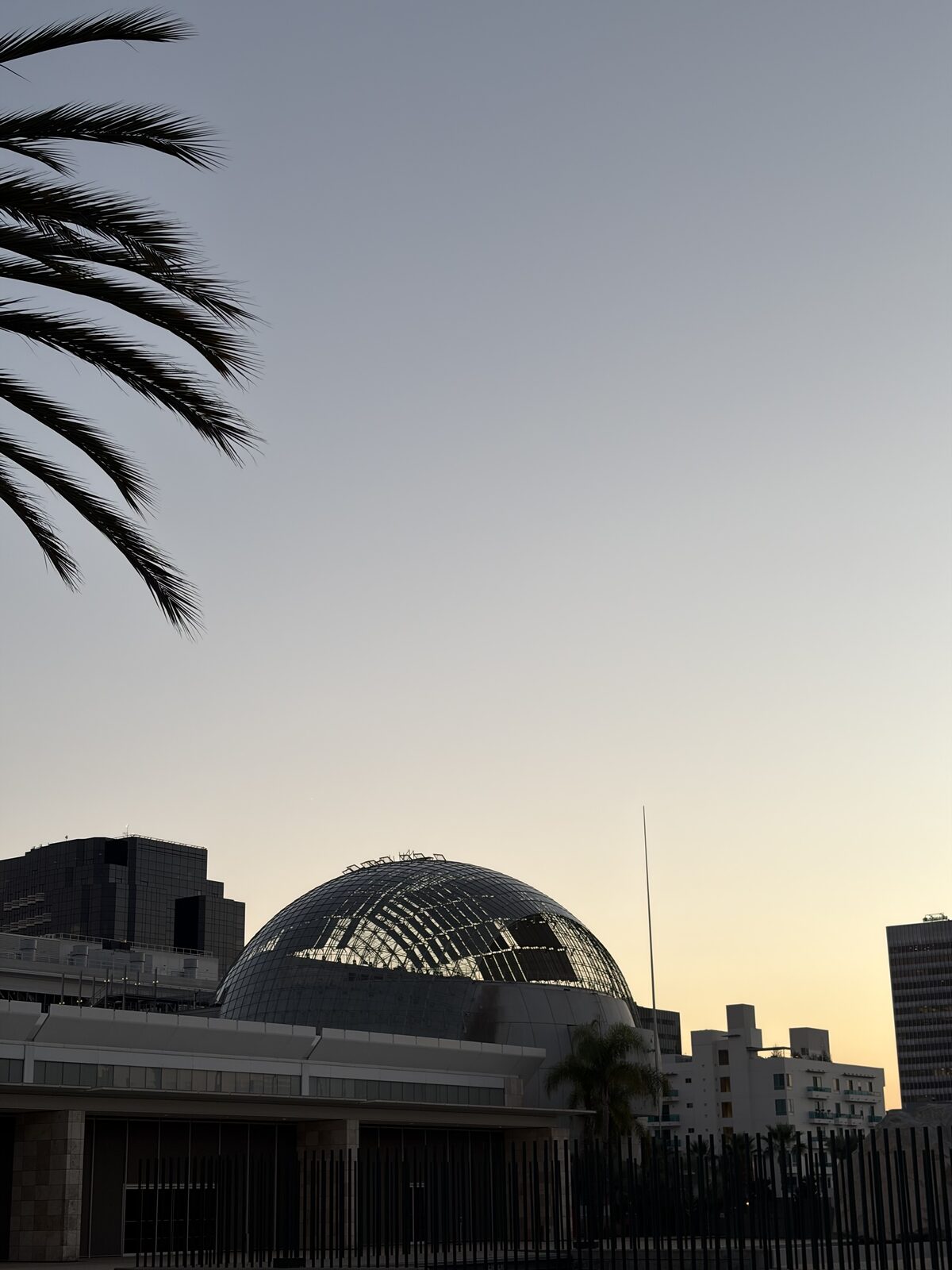
Story time! So last week I’m at LACMA for a talk featuring Marc Merrill, co-founder of Riot Games and Michael Govan, LACMA CEO for a Genesis Talk (Genesis is Hyundai's luxury brand; Hyundai sponsors these talks). The talks are intended to be about culture, creativity and innovation. Candidly I was pretty excited about attending. Riot Games is an enormous company rooted in gaming and provides all kinds of art and production jobs in LA. Since gaming is also tech, I expected a really interesting discussion of what’s happening to LA’s entertainment economy, the effects of artificial intelligence on the job market and the broader tensions between technology, creativity and media.
Instead, I’m listening to these two guys talk and it’s like watching an old rich man, who needs more money, massage a young rich man who will trade his money for the prestige that the old man offers. There are about 200 of us in the audience. Listen, If there’s one place in the world that artistic creativity and capital meet, it’s Los Angeles. Money and art have always had a delicate marriage and yet…
At one point Marc goes on about KDA (shorthand, we soon learn for kills, deaths and assists) and how capitalizing on the popularity of this term, Riot invented a synthetic k-pop group that streams as one of the largest in the world. Michael asks, “What is KDA?” to which Marc explained kills, deaths and assists! Govan chuckled and responded, “It's good to have a community of hundreds of millions of people too!” No interrogation, no curiosity.
Marc celebrated how effective his algorithmic surveillance is, noting “we created server side, an analysis of chat, and voice, and whatnot, and there's reporting system,” that flags about 60% of players, noting that players who are penalized have a recidivism rate of 30%. The surveillance, he noted, is partially driven by AI and partially by players who can report other players, resulting in “report cards,” which police the platform. Michael responds, “Can we put you in charge of the real world, and you can issue report cards?”
I understand what’s happening here (Marc is a donor) and I sympathize with Govan’s attempt at humor, but it’s a lazy retort for anyone, let alone someone who is at the top of their field. Sure, I see why the real world needs report cards. But it needs them because of the very platforms Marc is describing.
The best part was Marc’s opening thesis that online first-person shooting games help develop fine young men. Sportsmanship, he says! Listen, I have no axe to grind with gaming or the possible connection to what ails young men in the United States. I grew up with Nintendo and loved marathon sessions of Mario Brothers, Duck Hunt and Zelda. But c’mon, let’s not pretend you’re running Kurt Hahn’s Outward Bound. Your computer game keeps young men alone in dark rooms and basements staring at screens. Marc celebrated the sportsmanship of online vernacular like, ‘gg’ or good game as proof positive that his games help with cognitive development. To which Michael rambled on about how the world is just becoming more connected or somesuch vaguery.
The two finished with a celebration of Los Angeles as experiencing an “expansion of creativity,” where engineering is really another form of art, to cite Michael. Something about e-sports. Something about using Unity in Buddhist temples.
I asked a few people afterwards what they thought as we walked out. Many were Riot employees (Michael called them ‘Rioters’) or older art appreciators. Most said it was interesting or outside their wheelhouse but impressive.
You know what’s impressive? How much revenue these entities generate. Riot Games is worth an estimated $21 billion. E-sports is another $5 billion. That K/DA synthetic artist has billions of streams. LACMA, too, with over $2 billion in assets and a quarter billion in annual revenue, not including hundreds of millions in public and private donations. All this money revealing our future to us.
The problem isn’t capitalism per se. Or money. The problem is so much money in the hands of so few. This is corrosive in every market where it occurs, especially to workers, customers and innovation. Without competition, we see monopolies which are too big to fail. And when it comes to the arts, we are in great danger. Art is how we generate and connect to each other. When this system breaks down, we become more alone, isolated and eventually fearful of each other. With the recent approval of the WB/Paramount merger by State AGs, we can be sure the system has broken down.
The solution isn’t obvious or easy. We could build new systems, but it is nearly impossible to compete on size with juggernauts. We could self-govern in new systems, but socialism and community-led entities trade money for a different set of problems (namely, corruption). So we begin with small steps, small cracks to help find our way.
I start with the urgency of asking hard questions, even in the face of all this money and power. Enough with the lazy questions. You see it in the news (CNN’s Jake Tapper fishing with Gavin Newsom) and nearly all fawning interviews with tech leaders. Especially in the news, as the news runs on the same money that funds Newsom and Altman. We must ask tougher and smarter questions of our leaders. This means we need young, smart outsiders boldly asking hard questions of people in power.
Don’t know where to start? Start with the money. Follow the money. Ask who owns the IP, the back catalog, the deal structures. Ask who the donors are. Ask who gets paid when a synthetic band streams a billion times (and who doesn’t). The answers will lead us.
I’d guess there were 200+ of us at this event and not a single hard question asked. I didn’t ask either. That’s fear. Fear keeps us quiet.
But we know the world changes with choice. We can choose to ask hard questions and refuse PR answers. We can demand leaders who understand the technologies reshaping our lives. We can challenge the power of money.
Art is the real technology that keeps all 8.3 billion of us connected. To protect art is to protect each other.